
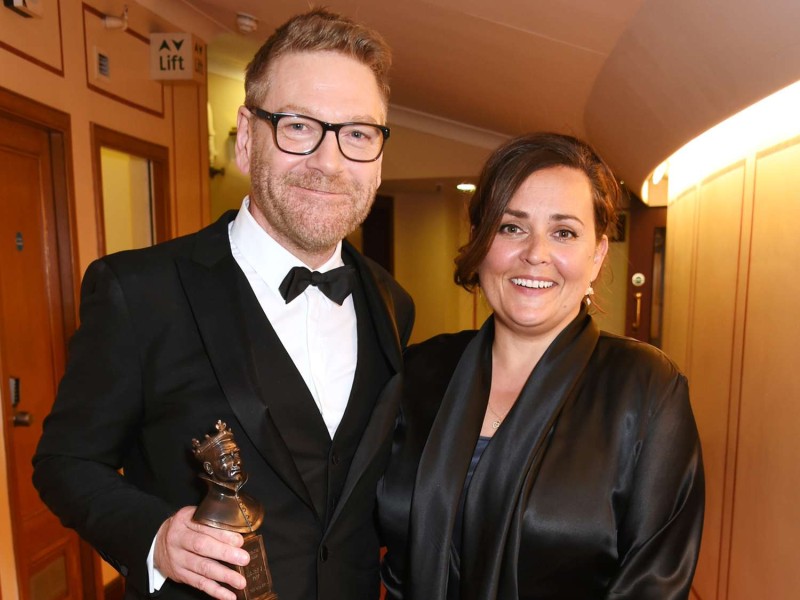
In the world of cinema, some figures shine in the spotlight while others shape the visual world behind the scenes. Lindsay Brunnock is one of the latter — a British art director whose artistic talent has helped shape the aesthetic of notable film projects, and a steadfast life partner to acclaimed actor and filmmaker Sir Kenneth Branagh.
Though often mentioned in contexts linked to her husband’s fame, Lindsay’s own story is firmly rooted in creativity, design, and commitment to the craft of storytelling. This comprehensive profile explores her journey from her early life in England to her subtle but meaningful influence on film production, her marriage, personal life choices, and her legacy as both an artist and a partner.
Quick Bio — Lindsay Brunnock
| Attribute | Details |
| Full Name | Lindsay Antonia Brunnock |
| Date of Birth | 1970 |
| Birthplace | Cambridgeshire, England |
| Profession | Art Director, Film Art Department |
| Known For | Starter for 10 (2006), Bright Young Things (2003), The Abduction Club (2002) |
| Spouse | Sir Kenneth Branagh (married May 24, 2003) |
| Children | None (the couple share a private family life with pets) |
| Years Active | 1990s–2000s (art department work) |
| Public Profile | Private, prefers craft over celebrity, occasional red carpet appearances |
Early Life and Formative Years
Lindsay Brunnock was born in 1970 in Cambridgeshire, England. Growing up in the English countryside provided a backdrop for her early exposure to rich cultural influences, and it was during her youth that she developed a keen eye for aesthetics, design, and visual storytelling — a combination that would later inform her career behind the camera.
According to some reports, she comes from a well‑established family where exposure to art and culture played a role in shaping her sensibilities. Her father, a businessman, and her family’s environment are said to have helped cultivate her appreciation for creative pursuits.
The path to film and design wasn’t necessarily mainstream in her early years. Yet, her drive drew her toward the creative side of filmmaking — a world where visuals, atmosphere, and environment are just as crucial as actors and dialogue.
Also Read: Jacqueline Keegan — The Private Woman Behind a British Screen Star
Building a Career Behind the Scenes
Lindsay Brunnock’s professional journey lies in the art department of film production — an area that blends creativity with logistics, design awareness with practical execution. As an art department professional and art director, she played a key role in shaping how films look and feel, contributing to the visual language of cinema.
She gained notable credits in a number of British film productions during the late 1990s and early 2000s:
- Born Romantic (2000) — A British romantic comedy that offered a lively, stylish backdrop where visual detail was essential.
- The Abduction Club (2002) — A period adventure film that required careful design to recreate authentic historical settings.
- Bright Young Things (2003) — A Stephen Fry–directed adaptation of the Evelyn Waugh novel where visual flair was central to the storytelling.
- Starter for 10 (2006) — A British comedy‑drama capturing university life and youth culture in the 1980s.
While her art department credits may not make her a household name, they illustrate her steady involvement in British cinema at a time when the industry was producing both critically acclaimed and cult‑favorite stories. Her work involved collaboration with directors, producers, and creative teams to bring scripts to life through carefully designed sets, atmospheric details, and cohesive visual coherence.
Unlike actors who appear on screen, art directors like Brunnock contribute to the visual canvas that frames every scene, subtly influencing audience experience through visual depth, color palettes, and contextual aesthetics.
Marriage to Sir Kenneth Branagh — A Partnership of Art and Life
Although both Lindsay Brunnock and Sir Kenneth Branagh come from different areas of the film industry, their connection blossomed into one of British cinema’s enduring partnerships.
How They Met and Early Relationship
The two were first introduced in the late 1990s or around 1997, reportedly through mutual connections in the British entertainment scene — including actress Helena Bonham Carter, who at the time was dating Branagh and introduced him to Brunnock.
What began as a friendship and professional acquaintance soon developed into a deeper connection. Relationships forged on film sets or through shared creative circles often draw from a mix of mutual respect, shared interests, and an appreciation for storytelling. In the case of Branagh and Brunnock, it appears that mutual admiration grew into love.
Private Ceremony and Longstanding Marriage
On 24 May 2003, Lindsay Brunnock and Kenneth Branagh married in a relatively private ceremony — one that reflected their preference for discretion rather than public spectacle.
Despite Branagh’s frequent appearances on red carpets, film festivals, and awards stages, the couple has maintained a steady, supportive partnership for two decades. They do not have children together; Branagh has mentioned in interviews that “it simply never happened” for them, though they share a family life with their dogs at home.
Their relationship is notable not just for its longevity, but also for how it weaves together two distinct worlds of cinema: performance and design. This partnership echoes a broader truth in creative industries — that mutual support and shared artistic values can form a strong personal foundation.
Also Read: Stephanie Cozart Burton — The Creative Force Behind the Scenes
Life Out of the Spotlight
Despite her connection to one of Britain’s most renowned actors, Lindsay Brunnock has consistently chosen to keep her personal life largely private. While she accompanies Branagh to major industry events — such as premieres of Belfast, Murder on the Orient Express, and Jack Ryan: Shadow Recruit — her own professional presence is rarely the focus of public attention.
This decision reflects a broader approach: artistry over celebrity. Many individuals in the film industry prefer to focus on their craft rather than public profiles, understanding that attention can sometimes distract from actual creative process.
Photographs from galas and premieres show Brunnock alongside Branagh at the Oscars, BAFTA celebrations, and other high‑profile moments — yet she remains someone who contributes quietly, deliberately choosing substance over sensationalism.
Her visibility at events is not about publicity but about supporting her spouse, celebrating artistic milestones, and honoring achievements together as a team.
The Role of Art Directors — Why It Matters
To understand Lindsay Brunnock’s career impact, it helps to appreciate what an art director does.
In film production, the art director works under the production designer to:
- Develop the visual concept of a film
- Oversee design of sets and props
- Coordinate with costume, lighting, and cinematography departments
- Ensure visual consistency and integrity throughout production
This role is essential to creating immersive worlds on screen. While audiences may not consciously notice every detail, the feeling of authenticity, tone, and visual coherence in films depends heavily on art direction.
Brunnock’s contributions to films such as The Abduction Club and Bright Young Things lie precisely in creating environments that enhance narrative immersion — from historical authenticity to 20th‑century settings.
Her work, therefore, reflects a deep understanding of visual storytelling and underscores an undervalued but critical contribution to filmmaking.
Public Perception vs. Personal Identity
Because Lindsay is primarily referenced as Branagh’s wife, public narratives sometimes overshadow her individual achievements. However, it’s important to distinguish between:
- Public recognition driven by association, and
- Professional merit earned through craft.
Brunnock’s body of work predates, and in many ways stands separately from, her marriage. Her art department credits speak for her own creative path, not merely a role tied to her spouse.
Furthermore, her decision to stay mostly out of tabloid narratives reveals a commitment to personal boundaries — a choice many industry professionals make to preserve private identity. This balance between visibility and discretion is increasingly rare in a media‑saturated age.
Influence and Legacy
While not a household name, Lindsay Brunnock represents a class of professionals whose impact is felt through the visual terrain of cinema rather than the spotlight. Her work contributes to the emotional and aesthetic texture of films — environments audiences absorb as part of the story.
Her partnership with Branagh also showcases how film professionals from different domains support and enrich each other’s lives. It demonstrates that relationships in the creative world can be deeply complementary, blending performance with design, story with environment.
Her legacy, therefore, is not in one iconic moment but in the countless subtle details of filmic worlds she helped shape — and in the stability of a personal life lived with intention — both within and beyond the lens.
Also Read: Amber Jaeger — Life, Career, Roles & Personal Journey
FAQ‘s
Who is Lindsay Brunnock?
Lindsay Brunnock is a British art director known for her work in the film industry on projects such as Starter for 10 and Bright Young Things.
What does Lindsay Brunnock do?
She works as an art director and has credits in the art department of British films, contributing to visual design and storytelling.
Is Lindsay Brunnock married?
Yes — she has been married to British actor and filmmaker Sir Kenneth Branagh since May 24, 2003.
Do Lindsay Brunnock and Kenneth Branagh have children?
No — the couple does not have children together.
Where was Lindsay Brunnock born?
She was born in Cambridgeshire, England.
What films has Lindsay Brunnock worked on?
She worked on films such as Starter for 10 (2006), Bright Young Things (2003), The Abduction Club (2002), and Born Romantic (2000).
Conclusion
Lindsay Brunnock is a reminder that cinema is built not only by stars on screen but by visual artists behind the scenes. Her journey from Cambridgeshire to the heart of British film production showcases a dedication to craft that deserves independent recognition.
Her partnership with Sir Kenneth Branagh illustrates how love and creativity can coexist in a life that embraces both art and personal privacy. While she chooses not to chase fame, her contributions to the visual world of cinema — and her role in supporting one of Britain’s most acclaimed filmmakers — reflect a career lived with purpose, quiet confidence, and artistic integrity.
In a media landscape obsessed with celebrity glamour, Lindsay Brunnock stands out for her substantive creative contribution and a personal life defined by choice, not exposure — a legacy well worth honoring.

2 Comments
Pingback: Mette Marie Kongsved — The Danish Producer Shaping Modern Indie Cinema - TrueTimes
Pingback: Rodney Timson — A Life of Service, Support, and Quiet Influence - TrueTimes