
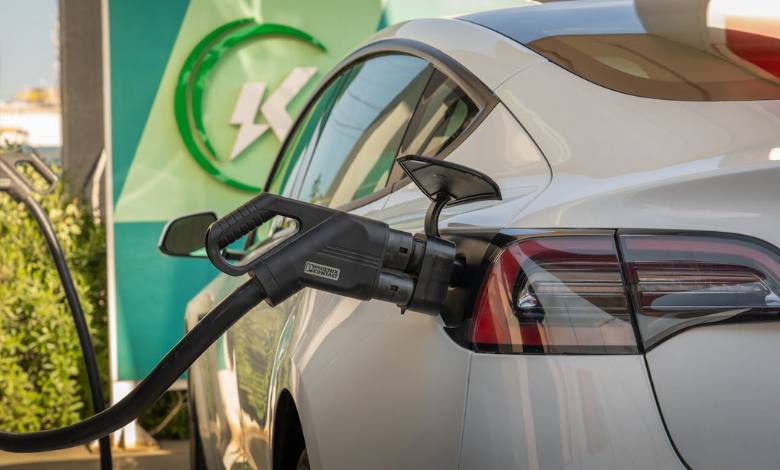
Sodium-ion batteries are no longer just an interesting lab idea. In 2026, they are moving into real products, real factories, and real vehicles. That is why many people now see sodium-ion battery technology as one of the most important battery trends of the year. The biggest story is not only one breakthrough. It is the combination of better safety, improving energy density, stronger cold-weather performance, and rising commercial production.
Why sodium-ion batteries matter
A sodium-ion battery works in a similar basic way to a lithium-ion battery, but it uses sodium instead of lithium to move ions between electrodes. This matters because sodium is widely available and cheaper as a raw material. That gives battery makers a possible path to lower-cost battery production and a more diversified battery supply chain, especially at a time when the world wants more energy storage systems and more affordable electric vehicles.
Also Read: Apple AI Smart Glasses: The Future of Wearable Tech
2026 is the year sodium-ion starts to look commercial
The International Energy Agency says 2026 could be a pivotal year for sodium-ion battery scaling. That does not mean sodium-ion will suddenly replace lithium-ion everywhere. It means the technology is finally reaching the stage where companies can test it at market scale. Reuters also reports that CATL plans to mass-produce its Naxtra sodium-ion battery in 2026, while automakers are preparing real passenger vehicles around this chemistry.
Breakthrough 1: The first mass-production sodium-ion passenger car
One of the clearest 2026 breakthroughs is that sodium-ion batteries are entering passenger EVs. In February 2026, CATL and CHANGAN unveiled what they described as the world’s first mass-production passenger vehicle equipped with sodium-ion batteries, with a market launch targeted for mid-2026. This is a major shift for the EV battery market because sodium-ion has long been discussed mainly for stationary storage, scooters, and lower-range use cases. Moving into passenger cars gives the technology much more credibility.
Breakthrough 2: Better energy density makes sodium-ion more practical
For years, the biggest weakness of sodium-ion batteries was lower energy density. That challenge has not disappeared, but the gap is getting smaller. CATL says its Naxtra sodium-ion battery reaches up to 175 Wh/kg, which it calls the current benchmark for mass production. Reuters also reported that this level is close to lithium iron phosphate, or LFP, batteries that are already widely used in EVs and grid storage. Better battery energy density means sodium-ion can now serve more practical transport and storage needs than before.
Breakthrough 3: Safety is becoming a real selling point
Battery safety is one of the most important topics in the energy storage industry. In April 2026, researchers from the Chinese Academy of Sciences reported a sodium-ion battery safety breakthrough using a polymerizable non-flammable electrolyte. According to the institute, the new design helped ampere-hour-level sodium-ion cells pass nail penetration tests without smoke, fire, or explosion, and no thermal runaway occurred even in thermal abuse tests at 300°C. If this approach scales well, it could make sodium-ion batteries especially attractive for electric vehicles, battery storage systems, and other uses where thermal runaway is a major concern.
Breakthrough 4: Strong cold-weather performance
Cold-weather performance is another area where sodium-ion batteries are gaining attention. CATL says its sodium-ion system can maintain over 90% capacity retention at -40°C and still deliver stable power at temperatures as low as -50°C. The company also says it can provide nearly triple the discharge power of equivalent LFP batteries at -30°C. This is important because cold weather remains a real problem for many EV batteries. In regions with freezing winters, stronger low-temperature performance could become one of sodium-ion’s biggest market advantages.
Breakthrough 5: The technology is finding its best use cases
Sodium-ion may not beat lithium-ion in every category, but it does not need to. The IEA says sodium-ion batteries are already suitable for specific applications, especially in cold climates and in hybrid systems that combine sodium-ion and lithium-ion cells. Reuters similarly reports that the industry consensus is for sodium-ion to complement lithium-ion, not replace it. That makes sense. Different battery chemistries can serve different needs: lithium-ion for high energy density, and sodium-ion for cost-sensitive, cold-weather, or safety-focused applications.
What this means for electric vehicles and energy storage
The rise of sodium-ion batteries could reshape both the electric vehicle battery market and the stationary energy storage market. For EV makers, sodium-ion offers a possible route to more affordable city cars and better winter performance. For utilities and grid operators, the chemistry offers a way to diversify away from a battery industry heavily tied to lithium supply chains. Reuters notes that sodium-ion components are expected to become cheaper as production ramps, although the technology is still expensive today because the supply chain is new and not yet mature.
The limits are still real
It is important to stay realistic. Sodium-ion batteries still face serious challenges. The IEA says highly optimized lithium-ion batteries, especially modern LFP cells, still have advantages in energy density, cost, and supply chain maturity. Reuters also notes that sodium-ion packs usually store less energy per kilogram, so they can be heavier and larger for the same amount of stored power. In other words, 2026 is a breakthrough year, but not the end of the competition.
Final thoughts
The biggest sodium-ion battery breakthrough in 2026 is simple: the technology is becoming real. It is moving from pilot projects and research papers into commercial production, passenger EVs, and safer battery designs. Sodium-ion batteries are not likely to replace lithium-ion everywhere, but they are becoming a serious lithium-ion alternative for the right jobs. In the years ahead, the battery industry may not be ruled by one chemistry. It may be shaped by a smarter mix of batteries, each built for a different purpose.

2 Comments
Pingback: Selen Erdem: The Visionary Artist Shaping Contemporary Art - TrueTimes
Pingback: Rachel Hunter: From Supermodel to Actress, Entrepreneur, and Television Personality - TrueTimes