
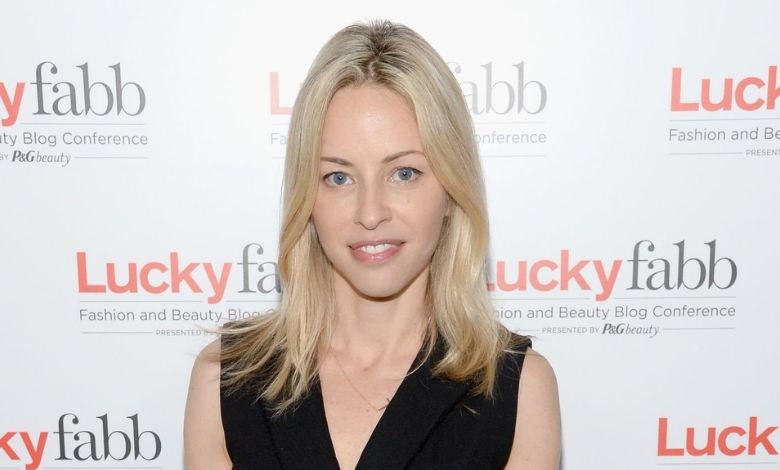
Heidi Bivens is an American costume designer and fashion stylist known for using clothing to establish character, period, social background, and emotional development. Her work spans independent cinema, television, fashion editorials, advertising, and music-related projects. She gained her widest public recognition as the costume designer for the first two seasons of HBO’s Euphoria.
Before joining the HBO drama, Bivens had already developed a distinctive career through films such as David Lynch’s INLAND EMPIRE, Harmony Korine’s Spring Breakers, Jonah Hill’s Mid90s, and The Beach Bum. Her later credits include Deep Water, Causeway, and Benny Safdie’s 2025 film The Smashing Machine.
Bivens has received three Primetime Emmy nominations for her work on Euphoria. She also documented the series’ costumes and creative process in Euphoria Fashion, a 272-page book released by A24 in 2023. Her career provides an important example of how costume design connects filmmaking, fashion history, street culture, and character-based storytelling.
Also Read: Liza Mundy Biography: Age, Books, Career, and Bill Nye
Who Is Heidi Bivens?
Heidi Bivens is an American costume designer and fashion stylist best known for designing the costumes for the first two seasons of HBO’s Euphoria. Her film credits include INLAND EMPIRE, Spring Breakers, Mid90s, The Beach Bum, and The Smashing Machine. She is also the author of A24’s 2023 book Euphoria Fashion.
How Old Is Heidi Bivens?
Heidi Bivens’ reported birth date is June 27, 1976. Based on that date, she is 49 years old as of June 18, 2026, and will turn 50 on June 27, 2026. The date appears in established entertainment databases, although Bivens has not widely discussed her age in public interviews.
What Is Heidi Bivens Best Known For?
Bivens is best known for creating the character-focused wardrobes of Euphoria. She designed costumes for Rue, Jules, Maddy, Cassie, Lexi, Kat, Nate, and other characters during the show’s first two seasons. Her work combined vintage clothing, streetwear, independent labels, established fashion houses, and specially sourced pieces.
What Films Has Heidi Bivens Worked On?
Her major costume-design credits include INLAND EMPIRE, Spring Breakers, Mid90s, The Beach Bum, Deep Water, Causeway, and The Smashing Machine. These productions range from experimental cinema and youth dramas to psychological thrillers and biographical films, demonstrating the variety of her professional work.
Has Heidi Bivens Won an Emmy?
Heidi Bivens has not won a Primetime Emmy, according to the Television Academy’s official records. She received three nominations for Outstanding Contemporary Costumes for Euphoria, covering episodes recognized in 2020, 2021, and 2022. These nominations also credited members of the costume department who worked with her.
Heidi Bivens Profile Summary
| Profile detail | Information |
|---|---|
| Full name | Heidi Bivens |
| Profession | Costume designer and fashion stylist |
| Reported date of birth | June 27, 1976 |
| Reported age | 49 as of June 18, 2026 |
| Birthplace | Annandale, Virginia, United States |
| Nationality | American |
| Education | Studied at Hunter College in New York |
| Areas of study | Film, filmmaking, and journalism have been referenced in interviews |
| Best known for | Costume design for the first two seasons of Euphoria |
| Selected films | INLAND EMPIRE, Spring Breakers, Mid90s, The Beach Bum, Deep Water, Causeway, The Smashing Machine |
| Television work | Euphoria |
| Book | Euphoria Fashion |
| Publisher | A24 |
| Emmy record | Three nominations |
| CDGA recognition | Multiple Costume Designers Guild Award nominations |
| Active fields | Film, television, editorial styling, advertising, and fashion |
| Parents | Not reliably documented in authoritative public sources |
| Height | Not reliably confirmed |
Early Life and Background
Heidi Bivens was born in Annandale, Virginia, according to biographical profiles and entertainment industry databases. She has described the area as a quieter suburb during her childhood than it later became. Her older sister’s interest in arthouse cinema reportedly introduced her to filmmakers such as David Lynch, Gus Van Sant, and Jim Jarmusch.
This early exposure helped develop Bivens’ interest in film. She did not initially plan to build a conventional fashion career. Instead, she wanted to enter the film industry and work on movie sets, with writing and directing among her early interests.
Bivens moved to New York when she was approximately 18. The city’s film, publishing, art, music, and street-fashion communities offered opportunities that were less available in her Virginia hometown. New York during the 1990s also became an important visual reference point in her later costume work.
Education
Bivens attended Hunter College in New York. Different interviews have described her studies as filmmaking, film studies, or journalism, suggesting that she explored more than one connected field while developing her professional direction.
In interviews, Bivens has explained that she originally considered writing and filmmaking. She began gaining publishing experience through fashion magazines, including Women’s Wear Daily, W, and Paper. This work introduced her to editorial production, clothing research, photography, and visual storytelling.
Her magazine experience eventually moved her toward styling. Fashion styling and costume design require different methods, but editorial work gave Bivens practical experience in selecting clothing, building visual references, working with creative teams, and understanding how an image communicates identity.
Public sources do not consistently clarify whether she completed a specific degree. It is therefore more accurate to state that she studied at Hunter College than to make an unsupported claim about her graduation status.
Career and Professional Journey
Early Magazine and Styling Work
Bivens began her professional journey in fashion publishing. She worked with or interned at publications including Women’s Wear Daily and W and later held an editorial position at Paper. Her responsibilities helped her understand fashion markets while giving her experience with magazine shoots and styling assignments.
She gradually became established as a fashion stylist, working across editorial photography, advertising, and celebrity-related projects. However, her interest in narrative filmmaking remained central to her career plans.
The distinction between styling and costume design became important to her work. A stylist usually focuses on presenting a person, product, or fashion concept, while a costume designer must consider fictional character, narrative continuity, historical context, practical production demands, and collaboration with actors and directors.
Entry Into Film Costume Departments
One of Bivens’ early film experiences was working as a wardrobe assistant on Michel Gondry’s Eternal Sunshine of the Spotless Mind. The position allowed her to observe how costume departments functioned within a larger film production.
This experience helped connect her fashion knowledge with her interest in cinematic storytelling. Costume departments gave her a practical route onto film sets while allowing her to use clothing as part of character construction.
INLAND EMPIRE
Bivens received an important early costume-design credit on David Lynch’s INLAND EMPIRE, released in 2006. The experimental film featured Laura Dern and became Lynch’s final feature-length film.
Working on a David Lynch production was particularly significant because Bivens had encountered his films during her youth. The project also required an approach suited to Lynch’s unconventional structure, changing identities, and unsettling visual language.
Rather than treating clothing as decoration, the costumes needed to function within a story that deliberately blurred performance, memory, fiction, and reality. INLAND EMPIRE helped establish Bivens as a costume designer capable of working within a director-led visual environment.
Spring Breakers
Bivens later designed the costumes for Harmony Korine’s Spring Breakers, released in 2012. The film starred Vanessa Hudgens, Selena Gomez, Ashley Benson, Rachel Korine, and James Franco.
The costumes became closely associated with the film’s visual identity. Neon swimwear, sportswear, masks, printed clothing, and accessories contributed to its exaggerated presentation of youth, consumption, fantasy, and danger.
The clothing did not simply reproduce everyday college fashion. It helped create a heightened and deliberately artificial world. Bivens’ work on the film also demonstrated her ability to identify elements of existing youth culture and reorganize them into a recognizable cinematic style.
Although the film’s wardrobes later appeared influential, it would be inaccurate to claim that Bivens invented the styles it used. The costumes drew from existing beachwear, street clothing, music imagery, and early-2010s fashion. Their significance came from how those references were combined and presented within the film.
Mid90s
Bivens designed the costumes for Jonah Hill’s 2018 directorial debut, Mid90s. The story follows a young boy who becomes involved with a group of skateboarders in 1990s Los Angeles.
Period accuracy was central to the production. Bivens researched skate magazines, brand archives, photography, graphic shirts, shoes, denim shapes, and the way young skateboarders wore clothing during the decade.
The costumes also needed to look used and personal rather than assembled for a modern fashion campaign. Details such as oversized jeans, shirt proportions, footwear, and graphic placement helped establish the film’s period and social environment.
Bivens’ direct familiarity with 1990s fashion culture supported the research, but personal memory alone was not sufficient. Archival references and consultation helped prevent the costumes from becoming a simplified or overly polished version of the decade.
The Beach Bum
Bivens worked with Harmony Korine again on The Beach Bum, released in 2019. The film’s clothing was more colorful and deliberately eccentric than the restrained period detail of Mid90s.
Matthew McConaughey’s character, Moondog, required a wardrobe that communicated excess, disorder, confidence, and humor. Printed sets, loose silhouettes, unusual accessories, bright colors, and unconventional combinations supported the character’s behavior and the film’s comic tone.
The project demonstrated that Bivens’ approach changes according to the needs of a production. Her work can involve detailed historical reconstruction, contemporary realism, or deliberately exaggerated character styling.
Euphoria
Bivens became the costume designer for HBO’s Euphoria, created by Sam Levinson and first released in 2019. Her work on the show’s first two seasons brought her career to a much larger international audience.
Each principal character developed a recognizable wardrobe identity. Rue’s loose and functional clothing reflected her physical and emotional condition. Jules’ changing silhouettes and references supported her exploration of identity. Maddy’s controlled, attention-commanding outfits communicated confidence, while Cassie’s wardrobe increasingly reflected her emotional circumstances and desire for approval.
Bivens and her department combined accessible clothing, vintage items, independent designers, streetwear, luxury labels, and pieces adapted for specific scenes. The wardrobes often moved between believable high-school clothing and visual fantasy.
This balance was intentional. Euphoria did not operate as a documentary representation of how every American teenager dresses. Its costumes heightened character emotions while drawing from recognizable elements of youth fashion.
Collaboration also played an important role. Actors participated in fittings, while the director, makeup department, hair department, cinematographers, and production designers contributed to the completed visual language. For that reason, the show’s style should be understood as the work of several departments rather than the achievement of one person alone.
Bivens designed the first two seasons and the two special episodes released between them. Costume designer Natasha Newman-Thomas later assumed responsibility for the third season. Therefore, descriptions claiming that Bivens designed every season of Euphoria are no longer accurate.
Deep Water, Causeway, and The Smashing Machine
Bivens’ later film credits include Adrian Lyne’s psychological thriller Deep Water and Lila Neugebauer’s drama Causeway, both released in 2022.
She also served as costume designer on Benny Safdie’s The Smashing Machine. The biographical sports drama stars Dwayne Johnson and Emily Blunt and premiered at the Venice International Film Festival in 2025.
Some early online listings associated the production with 2024, likely because filming and production activity occurred before its release. Its recognized film and festival year is 2025.
Major Achievements and Recognition
The Television Academy records three Primetime Emmy nominations for Bivens in the Outstanding Contemporary Costumes category. All three were connected to Euphoria.
Her first nomination recognized the 2019 episode “The Next Episode” at the 2020 awards. A second nomination followed for the special episode “F**k Anyone Who’s Not a Sea Blob” in 2021. Her third nomination recognized “Trying to Get to Heaven Before They Close the Door” in 2022.
The official records identify Bivens as costume designer while also naming costume supervisors and assistant costume designers. This reflects the collaborative structure of professional costume departments.
Bivens also received Costume Designers Guild Award nominations for Euphoria. Official CDGA archives document nominations at the 23rd, 24th, and 25th Costume Designers Guild Awards in the Excellence in Contemporary Television category.
These records should be described as nominations rather than wins. Some online profiles incorrectly convert award nominations into victories or omit the costume-team members who shared recognition for the work.
Euphoria Fashion Book
A24 published Euphoria Fashion by Heidi Bivens in 2023. The clothbound, illustrated book contains 272 pages and examines the costume work developed for the first two seasons of the series.
The publication includes behind-the-scenes material, costume breakdowns, conversations with cast members, designer interviews, essays, and previously unpublished imagery. Jeremy Scott contributed the introduction, while other writers and creative professionals examined themes found within the show’s clothing.
The book documents more than finished outfits. It provides insight into the decisions, research, fittings, collaboration, and character analysis involved in costume design. It also shows how clothing can communicate personality and changing emotional circumstances without relying entirely on dialogue.
For students and readers interested in costume design, the publication serves as a record of contemporary television production. For fans, it provides context for the show’s most discussed wardrobes.
Personal Life
Heidi Bivens generally keeps public interviews focused on her creative practice, education, research methods, and professional projects. Reliable information about her current family circumstances and relationships is limited.
She has spoken about growing up with an older sister who introduced her to independent and arthouse cinema. Beyond that detail, established interviews provide little confirmed information about her immediate family.
Some websites list a parent’s name, height, relationship history, or other personal measurements without identifying reliable primary evidence. These claims should not be included as established facts.
A responsible Heidi Bivens biography should concentrate on her documented professional work rather than repeating personal information copied between celebrity-profile websites.
Philanthropy and Public Engagement
There is limited publicly documented evidence of Heidi Bivens operating a personal foundation or maintaining a major, formally organized philanthropic program. It would therefore be inappropriate to assign charitable activities to her without direct evidence.
Her public engagement has largely taken the form of interviews, professional talks, fashion discussions, museum-related appearances, and educational conversations about costume design. She has discussed her creative process with fashion organizations, publications, and audiences interested in film and television production.
Her book also contributes to public understanding of costume work by recording the research and collaboration behind Euphoria. However, professional education and public discussion should not automatically be described as philanthropy.
Also Read: Holly Cooper Biography: Age, Family, TikTok Career, and X Factor Past
Public Perception and Misconceptions
Bivens is frequently presented as the fashion designer behind Euphoria. That description is incomplete. She worked as the show’s costume designer, a position that involves narrative analysis, sourcing, fittings, budgeting, continuity, department management, and collaboration across production teams.
She is also sometimes credited with creating every fashion trend associated with the series. The relationship is more complex. Euphoria drew from runway collections, independent designers, vintage fashion, social media, streetwear, subcultures, and existing youth styles. The show then reorganized these references in ways that influenced viewers and fashion coverage.
Another misconception is that Bivens designed Euphoria indefinitely. Her documented work covers the first two seasons and the special episodes. The production appointed a different costume designer for season three.
Claims that she is an Emmy winner are also inaccurate. She has three Emmy nominations, which remain a significant professional achievement, but official Television Academy records do not list a win for her.
Finally, The Smashing Machine is sometimes described as a 2024 film. It premiered and was recognized as a 2025 release.
Privacy and Limited Public Information
Bivens has a substantial public record as a costume designer, but detailed biographical information remains limited. Her reported birth date and birthplace appear in established entertainment databases, although primary documentation is not publicly available.
Her height has not been reliably confirmed through an authoritative professional source. It is also unrelated to an evaluation of her career. Similarly, publicly repeated claims about her parents or current relationship status should not be treated as verified without direct evidence.
Net-worth figures attributed to Bivens are estimates produced by entertainment websites rather than confirmed financial disclosures. They should not be included in a fact-based biography.
These gaps do not prevent an accurate account of her work. Her film and television credits, interviews, award nominations, education, and book publication provide enough reliable material to evaluate her professional contribution.
Legacy and Influence
Heidi Bivens’ influence is most visible in the growing public understanding of contemporary costume design. Historical dramas and fantasy productions often draw attention to costumes because their clothing differs clearly from everyday life. Bivens demonstrated that present-day wardrobes can perform an equally important narrative function.
Her work on Spring Breakers, Mid90s, and Euphoria shows three different ways of representing youth culture. Spring Breakers used heightened color and repetition to create an artificial fantasy. Mid90s depended on careful period research. Euphoria combined realism with emotional and visual exaggeration.
This range is important to assessing her career. Bivens does not apply one recognizable wardrobe formula to every project. Instead, she adapts research, silhouette, color, brand selection, and clothing condition to the production’s characters and visual environment.
Her background in magazines also reflects a wider connection between fashion publishing and screen production. Editorial styling gave her knowledge of clothing and image-making, while film required her to apply those skills to continuity, performance, and narrative structure.
The popularity of Euphoria brought costume-design discussions to audiences who might not otherwise consider the profession. Through interviews and Euphoria Fashion, Bivens also made parts of the working process more visible.
Her lasting significance rests not only on individual outfits but on her demonstration that contemporary clothing can communicate identity, social position, memory, insecurity, aspiration, and personal change.
Frequently Asked Questions
Where was Heidi Bivens born?
Heidi Bivens was reportedly born in Annandale, Virginia, in the United States. She moved to New York at about 18 to pursue her interests in film, journalism, and creative production. New York later became the center of her work in magazine styling and costume design.
What did Heidi Bivens study?
Bivens attended Hunter College. Interviews describe her studies using terms such as filmmaking, film studies, and journalism. She entered fashion publishing while studying and gained experience through Women’s Wear Daily, W, and Paper before moving further into styling and costume departments.
What is Heidi Bivens’ book about?
Her book, Euphoria Fashion, examines the costumes and visual ideas developed for Euphoria. Published by A24 in 2023, it includes behind-the-scenes photographs, interviews, essays, designer discussions, and detailed material about the process of creating character wardrobes.
Did Heidi Bivens work on Euphoria season three?
Bivens was responsible for the first two seasons and the special episodes. Natasha Newman-Thomas became the costume designer for the third season. Bivens’ established influence remains part of the show’s visual history, but the later season should not be credited to her.
What awards has Heidi Bivens received?
Bivens has received three Primetime Emmy nominations for Outstanding Contemporary Costumes and multiple Costume Designers Guild Award nominations for Euphoria. Official records identify these honors as nominations, not wins.
Conclusion
Heidi Bivens is an American costume designer and stylist whose career connects fashion publishing with narrative film and television. After studying at Hunter College and gaining experience in magazines, she entered film costume departments and developed a portfolio that includes INLAND EMPIRE, Spring Breakers, Mid90s, The Beach Bum, Deep Water, Causeway, and The Smashing Machine.
Her most recognized work remains the first two seasons of Euphoria. The series brought her three Emmy nominations and multiple Costume Designers Guild Award nominations. In 2023, she expanded the project through the A24 publication Euphoria Fashion.
Although some personal details remain unverified, Bivens’ professional record is well documented. Her contribution lies in using clothing as a storytelling tool and showing how contemporary costume design can communicate character with the same precision expected in historical or fantasy productions.
