
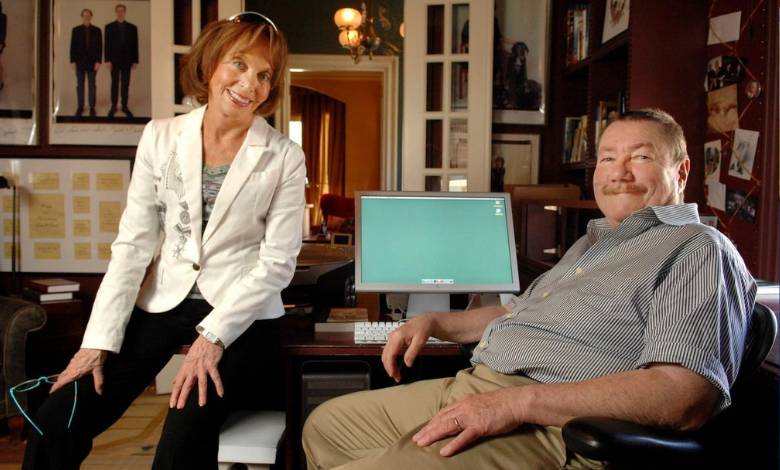
Joan Parker was an American writer, philanthropist, educator, activist, and public figure best known for her long marriage to mystery novelist Robert B. Parker, the creator of the Spenser detective series. While her public name is often connected to her husband’s literary career, Joan Parker’s own life included documented work in education, writing, television scripts, and Boston-area philanthropy.
Born Joan Hall on October 16, 1932, in Pittsfield, Massachusetts, she later became Joan H. Parker after marrying Robert B. Parker in 1956. Their marriage lasted until his death in 2010. She died on June 12, 2013, at age 80, after a diagnosis of lung cancer. Public information about some areas of her private life remains limited, so any serious biography of Joan Parker must separate verified facts from assumptions.
Early Life and Background
Joan Parker was born Joan Hall in Pittsfield, Massachusetts. Public reports also note that she grew up in Swampscott, Massachusetts, and later attended Colby College in Maine, where her relationship with Robert B. Parker became part of her life story. According to Cambridge Day, Joan and Robert Parker met as students at Colby College and married in 1956.
There is limited public information about her parents, childhood experiences, and early education beyond the details usually repeated in biographical notices. Because of that, it would be inaccurate to build a detailed childhood narrative without stronger public documentation. What can be stated with confidence is that she was Massachusetts-born and remained closely associated with the Boston and Cambridge area for much of her adult life.
Her early adult career also included education. Cambridge Day reported that she taught at Endicott College in Beverly and later worked as director of curriculum for public schools in northeastern Massachusetts. These details show that Joan Parker’s public identity was not limited to marriage or literary association. Before and alongside her connection to Robert B. Parker’s fame, she had a documented professional role in education.
Also Read: Who Is Joseph Gentile? Cathy Moriarty’s Husband and Father of Three
Marriage to Robert B. Parker
Joan Parker married Robert B. Parker in 1956. Robert Parker later became one of the best-known American crime writers of the late twentieth century, especially through his Spenser novels. Bookreporter notes that the Parkers attended Colby College together, married after his Army service, and had two sons, David and Daniel.
Their marriage became unusually visible because Robert B. Parker’s fiction often drew attention to questions of love, independence, and partnership. Public profiles described the couple’s unconventional living arrangement after a period of separation. They remained married but lived in separate private areas of their Cambridge home, while continuing their relationship and shared family life. The Boston Globe described this arrangement as a long-standing part of their marriage rather than a hidden scandal.
This detail is often repeated because it seems to echo the independent relationship between Spenser and Susan Silverman in Robert Parker’s novels. However, it should be handled carefully. Their marriage was a private relationship with public elements, not simply a literary device or a character study. Joan Parker herself objected to the assumption that she and Susan Silverman were the same person.
Joan Parker as a Writer and Co-Author
Joan Parker’s writing work is most often connected to Three Weeks in Spring, the nonfiction book she co-wrote with Robert B. Parker. The book addressed her experience with cancer and mastectomy. Boston.com described the book as a nonfiction account of her first cancer diagnosis and first mastectomy, written in a novelistic style and narrated in the third person.
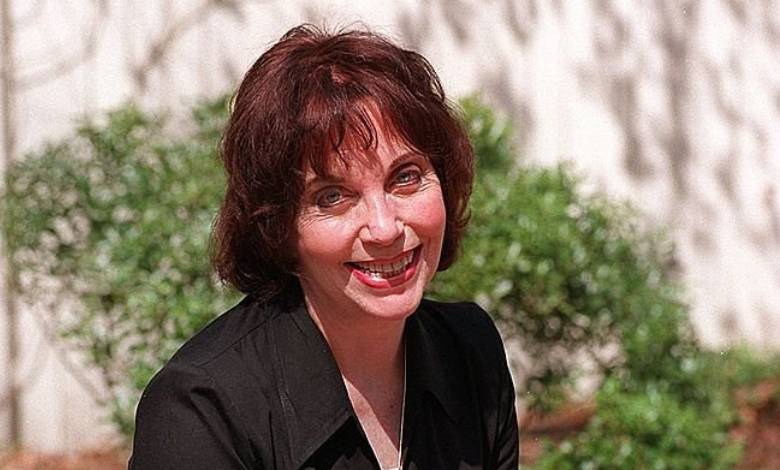
This book remains one of the clearest examples of Joan Parker’s public voice. It placed a personal medical experience into a written form that was direct, serious, and emotionally controlled. Because breast cancer and mastectomy were not always discussed as openly in public at the time, the book gave readers a view of illness, marriage, fear, and recovery through the Parkers’ shared perspective.
Joan Parker also collaborated with her husband on television-related work. Cambridge Day reported that the Parkers worked together on teleplays for Spenser: For Hire and A Man Called Hawk, television adaptations connected to Robert B. Parker’s fictional world. This does not make her a public celebrity in the same way as her husband, but it does show documented creative involvement beyond one book.
Family Life and Children
Joan and Robert B. Parker had two sons, Daniel Parker and David Parker. Public reports identify Daniel as an actor and David as a dancer, teacher, choreographer, and director of his own dance company. Boston.com reported that Joan’s philanthropic interests were closely connected to her sons and the communities important to them.
Family appears as a central theme in public accounts of Joan Parker’s life. Her son David described her as deeply connected to motherhood and family, even while she was also known socially and philanthropically. This matters because her public work was not described as abstract charity alone. It was often tied to personal commitments, especially arts organizations, LGBTQ-related causes, and services for people facing serious illness.
At the same time, the private lives of her children should not be overused for biographical content. Their names and public careers are documented, but a responsible article should avoid unnecessary personal detail. Joan Parker’s family life is relevant because it shaped her public engagement, not because it should be treated as gossip.
Philanthropy and Public Engagement
Joan Parker’s philanthropy is one of the most documented areas of her life. Boston.com described her as active in arts organizations and Boston’s gay and lesbian community. She co-chaired Community Servings for two decades, an organization that provides emergency food and nutrition services for people with serious illnesses and their dependents or caregivers.
Her public engagement also included advisory roles and recognition from cultural and community organizations. Boston.com reported that she served on advisory boards for the American Repertory Theater and Greater Boston Parents, Families and Friends of Lesbians and Gays. She was honored with awards including the LifeSavor Award, ART Angel Award, and Cornerstone of Equality Award.
This documented record supports the description of Joan Parker as more than a spouse of a famous author. Her work in philanthropy, especially around HIV/AIDS services, LGBTQ support, arts, theater, and dance, gave her a public role in Boston-area civic life. She was not simply connected to institutions by name. Reports describe her as an active fundraiser, supporter, and organizer.
Public Perception and Misconceptions
One common misconception is that Joan Parker is important only because she was Robert B. Parker’s wife. That view is incomplete. Her marriage to Robert B. Parker is central to her public biography, but it is not the whole story. She was also a writer, educator, philanthropist, and activist with documented public work.
Another misunderstanding involves Susan Silverman, the fictional partner of Spenser in Robert B. Parker’s novels. Joan Parker was often described as the inspiration for Susan Silverman. However, Joan herself pushed back against the idea that she and Susan were identical. Boston.com reported her statement that she was not Susan Silverman, even though there were similarities in tone and public banter.
A third point of confusion comes from the name “Joan Parker,” which is shared by other individuals. This article refers specifically to Joan H. Parker, born Joan Hall, the wife of Robert B. Parker and co-author of Three Weeks in Spring. That distinction is important for accurate search results and responsible biography writing.
Death and Limited Public Information
Joan Parker died in Boston in June 2013 at age 80. IMDb lists her death date as June 12, 2013, in Boston, Massachusetts, and identifies Robert B. Parker as her spouse. Boston.com reported that she died of lung cancer at Massachusetts General Hospital.
Although several parts of her public life are well documented, other details remain limited. There is not enough widely available public information to give a full account of her private childhood, parents, personal finances, or complete day-to-day life outside the records connected to education, writing, marriage, and philanthropy. A factual biography should acknowledge those limits rather than fill them with speculation.
Also Read: Cliff Skelton: Former Conduent CEO, Navy Officer, and Transformation Leader
Legacy and Future
Because Joan Parker died in 2013, the “future” of her legacy rests in how accurately her life is remembered. Her name continues to appear in discussions of Robert B. Parker’s literary world, especially because of her connection to Susan Silverman and her role in the Parker family’s public story after Robert Parker’s death.
Her legacy also stands through her documented philanthropy. Community Servings, arts organizations, LGBTQ support networks, and Boston-area cultural life form an important part of how she should be remembered. Cambridge Day also noted that materials from Robert B. Parker and Joan H. Parker’s life are held in the Robert B. and Joan H. Parker Collection at Boston University’s Howard Gotlieb Archival Research Center.
A balanced view of Joan Parker should avoid reducing her to a muse, a character model, or a famous author’s widow. Those labels appear in public coverage, but they do not fully define her. Her life is better understood through several connected roles: educator, writer, mother, philanthropist, activist, spouse, and public figure in the Boston literary and charitable community.
Conclusion
Joan Parker was born Joan Hall on October 16, 1932, in Pittsfield, Massachusetts, and became publicly known as Joan H. Parker after her marriage to Robert B. Parker in 1956. She was the mother of Daniel and David Parker, the co-author of Three Weeks in Spring, and a documented collaborator on television work connected to Robert Parker’s fiction.
Her life also included meaningful public engagement. She supported arts organizations, LGBTQ-related causes, Community Servings, and charitable work connected to serious illness. Public reports describe her as a major fundraiser and active participant in Boston-area philanthropy.
The most accurate biography of Joan Parker is not built on speculation. It is built on verifiable facts: her Massachusetts roots, her long marriage to Robert B. Parker, her writing, her family, her philanthropic record, and her public effort to separate her own identity from the fictional Susan Silverman. Joan Parker’s story remains closely linked to Robert B. Parker’s literary legacy, but it also stands on its own as the life of a woman who contributed to education, writing, family, and public service.

2 Comments
Pingback: Avery Robinson Biography: Classical Music, Folk Song, and Public Record - TrueTimes
Pingback: Michael Joplin Biography: Verified Facts About Janis Joplin’s Brother - TrueTimes