
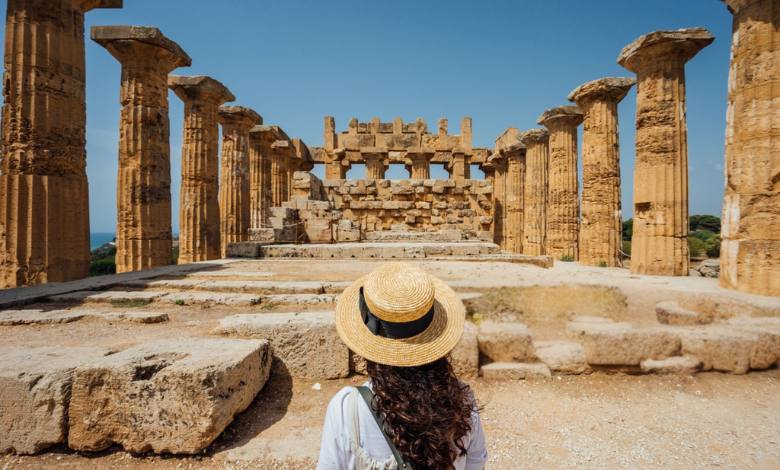
Sicilian women cannot be understood through a single image or simple stereotype. They belong to a society shaped by Mediterranean geography, ancient migration, religious traditions, family structures, economic change, and modern Italian public life. Sicily itself has long been a meeting point of cultures, influenced over centuries by Greek, Roman, Byzantine, Arab, Norman, Spanish, and Italian history. Its location at the center of the Mediterranean helped create a layered cultural identity that remains distinct within Italy. (Wikipedia)
This article looks at Sicilian women as a social and cultural subject rather than as one individual biography. The focus is on documented history, cultural roles, public engagement, social change, and common misconceptions. Since private family lives are not always recorded in public sources, this profile avoids invented details and focuses on verifiable context.
Profile Summary
| Field | Details |
|---|---|
| Subject | Sicilian women |
| Region | Sicily, Italy |
| Cultural Identity | Sicilian and Italian, with Mediterranean historical influences |
| Main Context | Family, culture, work, public life, heritage, social change |
| Historical Background | Shaped by Sicily’s position as a Mediterranean crossroads |
| Documented Public Roles | Cultural preservation, journalism, activism, community projects, education, business, politics |
| Data Limitations | Personal lives of private Sicilian women are not usually part of public record |
| Article Approach | Factual, neutral, non-speculative |
Historical Background of Sicilian Women
The history of Sicilian women is closely connected to the broader history of Sicily. The island’s society developed through centuries of contact with different civilizations. Greek colonies, Roman rule, Arab influence, Norman governance, and later European dynasties all left marks on Sicilian language, architecture, food, religion, and social customs. These influences affected everyday life, including the domestic, religious, and economic roles traditionally associated with women.
Historical records about women are often less complete than records about rulers, wars, trade, and institutions. This is not unique to Sicily; it is common in many historical societies. Women’s labor, family responsibilities, craft knowledge, and local religious participation were often central to community life but not always documented in official records. For that reason, any serious discussion of Sicilian women must separate documented history from romanticized assumptions.
Family, Society, and Community Roles
Family has traditionally held a strong place in Sicilian society. Women have often been associated with caregiving, household organization, food traditions, religious observances, and intergenerational memory. These roles should not be described as passive. In many families, women preserved recipes, dialect expressions, religious customs, and community networks that carried cultural identity across generations.
At the same time, it is important not to present all Sicilian women as fitting one traditional model. Sicily includes cities such as Palermo, Catania, Messina, and Syracuse, as well as rural towns and smaller communities. A woman’s experience may differ depending on education, class, location, employment, family background, and migration history. A modern professional woman in Palermo and an older woman in a rural village may share cultural references but live very different daily lives.
Cultural Contributions and Traditions
Sicilian women have played an important role in maintaining cultural traditions, especially through food, religious festivals, family rituals, and local crafts. Sicily’s public culture includes religious processions, folk customs, historic markets, and seasonal festivals. These practices are not limited to women, but women often participate in preserving and passing them on within families and communities.
Sicily also has recognized forms of intangible heritage. The Sicilian Opera dei Pupi, a traditional puppet theatre that developed in the 19th century, is listed by UNESCO as part of Italy’s intangible cultural heritage. While this art form is often discussed through puppeteers and performance families, it belongs to a wider cultural environment in which storytelling, memory, and local identity are maintained across generations.
Cuisine is another major part of Sicilian cultural identity. Sicilian food reflects Mediterranean agriculture, Arab-era influences, coastal life, religious calendars, and family-based cooking traditions. Women have often been central to home cooking and festive preparation, but professional kitchens, food businesses, and culinary tourism now show a broader, more public role for Sicilian women in food culture.
Education, Work, and Modern Society
Modern Sicilian women live within the legal and social framework of Italy and the European Union, but the region also faces economic challenges. Labor data shows that Sicily has had lower employment rates than the Italian national average. EURES reported that in 2023 Sicily’s overall employment rate was 34.1%, with the employment rate for women at 24.1% and for men at 44.7%. These figures show a significant gender and regional gap.
This does not mean Sicilian women lack ambition or ability. It shows that employment opportunity, regional economics, childcare structures, migration, informal labor, and social expectations can shape women’s access to paid work. Across the European Union, women’s employment remains lower than men’s, though the EU average is much higher than the figures reported for Sicily. In 2024, Eurostat reported an EU employment rate of 70.8% for women and 80.8% for men aged 20–64.
Today, Sicilian women are present in education, healthcare, entrepreneurship, arts, journalism, public administration, law, academia, and politics. Their experiences are not uniform, and public statistics cannot capture every detail of private resilience or professional achievement. Still, available labor data suggests that economic participation remains one of the most important issues in understanding women’s lives in Sicily today.
Philanthropy and Public Engagement
Documented public engagement by Sicilian women appears in several areas, including anti-mafia activism, journalism, cultural preservation, migrant integration, religious charity work, education, and community development. One notable public figure was Letizia Battaglia, born in Palermo in 1935, whose photography documented mafia violence and everyday life in Sicily. Her work became an important visual record of Palermo during a difficult period in the island’s modern history.
Another historically important Sicilian woman is Franca Viola, who became publicly known in the 1960s for refusing a so-called reparatory marriage after sexual violence. Her case became a major moment in Italian debates about law, gender, family honor, and women’s autonomy. It should be discussed carefully and factually because it involved a real person and a traumatic legal case.
Public engagement also exists at the community level. Fondazione San Vito Onlus in western Sicily documents activities connected with families, women’s empowerment, confiscated mafia properties, social support, and migrant integration. Its “Progetto Donna” has been reported as supporting women through cultural, practical, and community-based activities.
Also Read: Kansas Carradine Biography: Inside the Life of David Carradine’s Daughter
Public Perception and Misconceptions
Sicilian women are often described through strong stereotypes: traditional mothers, strict grandmothers, romantic Mediterranean figures, or symbols of family honor. These images may appear in film, tourism writing, or popular culture, but they do not represent the full reality. Sicilian women are not a single personality type. They are students, workers, artists, mothers, professionals, activists, migrants, retirees, and business owners.
Another misconception is that Sicilian culture is frozen in the past. Sicily has deep traditions, but tradition does not mean social life is unchanged. Like other regions, Sicily has been shaped by education, migration, tourism, digital media, economic pressure, gender-rights movements, and European legal frameworks. A factual article should recognize both continuity and change.
It is also inaccurate to reduce Sicilian women’s identity to mafia-related narratives. Mafia history has affected Sicily deeply, but Sicilian society is much broader than organized crime. Women such as Letizia Battaglia documented mafia violence, but her work also showed civic courage, social memory, and the everyday dignity of Sicilian people.
Privacy and Limited Public Data
Most Sicilian women are private citizens, not public figures. Their personal lives, family details, income, relationships, and beliefs should not be invented or treated as public information. Even when discussing known figures, only verified details should be included.
Historical data can also be uneven. Older records often prioritize male political, military, and religious leaders. Women’s contributions may appear indirectly through family history, cultural practice, oral tradition, or local archives. This limitation should be acknowledged instead of filling gaps with assumptions.
Legacy and Future
The legacy of Sicilian women lies in both public history and everyday cultural continuity. They have helped preserve language, foodways, religious customs, family memory, local business traditions, artistic expression, and community resilience. Documented figures such as Franca Viola and Letizia Battaglia show how individual women could influence national conversations about justice, dignity, and public truth.
The future of Sicilian women will likely depend on education, employment access, regional economic development, childcare support, social inclusion, and cultural representation. Available employment data shows that Sicily still faces serious challenges in women’s workforce participation. At the same time, women’s presence in education, culture, activism, and public life continues to expand.
Conclusion
Sicilian women represent a rich and complex subject shaped by history, family, culture, public life, and modern social change. Their story cannot be reduced to stereotypes about tradition or Mediterranean identity. Sicily’s history as a crossroads of civilizations created a layered society, and women have played important roles in preserving, adapting, and challenging that society.
A factual understanding of Sicilian women must balance respect for heritage with recognition of modern realities. Public records show contributions in culture, activism, journalism, social work, and community life. Data also shows continuing economic challenges, especially in women’s employment. The most accurate view is neither romantic nor negative: Sicilian women are part of a living society where history, identity, opportunity, and change continue to meet.
FAQs About Sicilian Women
Who are Sicilian women?
Sicilian women are women from Sicily, an autonomous region of Italy with a distinct Mediterranean history, culture, and identity.
Are Sicilian women Italian?
Yes. Sicilian women are Italian citizens when they are from Sicily, but many also identify strongly with Sicilian regional culture.
What are Sicilian women known for culturally?
They are often associated with family traditions, food culture, religious customs, community life, and the preservation of local heritage.
Are all Sicilian women traditional?
No. Sicilian women have diverse lives. Some follow traditional customs, while others live modern professional, academic, artistic, or public careers.
What challenges do Sicilian women face today?
Available labor data points to lower female employment in Sicily compared with national and EU averages, making economic opportunity a major issue.
Who are some notable Sicilian women?
Documented examples include Franca Viola, known for her role in Italian gender-rights history, and Letizia Battaglia, known for photography and civic documentation.
Why should stereotypes about Sicilian women be avoided?
Stereotypes simplify a diverse population. A factual view must consider history, region, class, education, work, public life, and personal privacy.

2 Comments
Pingback: Dorothy Rose: What Is Known About Amber Rose’s Private Mother - TrueTimes
Pingback: How to Memorise Drug Classes Without Losing Your Mind - TrueTimes