
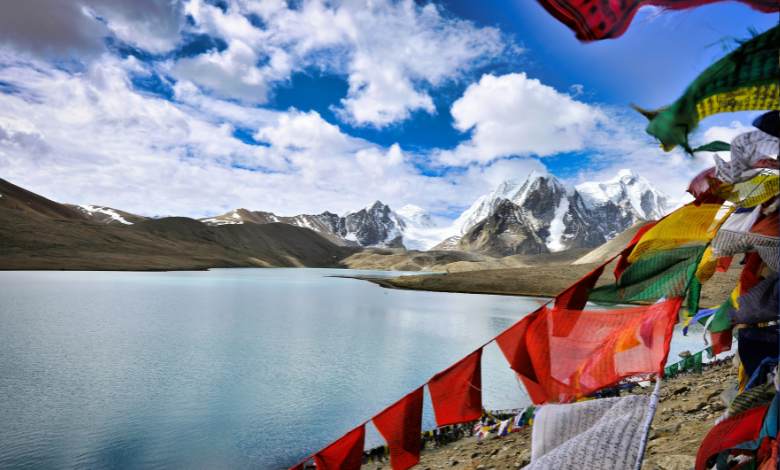
The Sikkim Himalayas refer to the Himalayan region within the Indian state of Sikkim, a small but geographically significant state in northeast India. Sikkim is bordered by Nepal to the west, Bhutan to the east, the Tibet Autonomous Region of China to the north and northeast, and West Bengal to the south. Its capital is Gangtok, and its identity is closely tied to the Eastern Himalayas, mountain ecosystems, Buddhist heritage, and the presence of Kangchenjunga, one of the world’s highest mountains.
Although the phrase “Sikkim Himalayas” is sometimes used in travel, geography, and environmental writing, it is not a person or a formal political unit. It is best understood as a regional profile of Sikkim’s Himalayan landscape, culture, history, and public identity. A factual account should therefore focus on verified geography, state history, biodiversity, administrative details, and cultural heritage rather than personal or speculative claims.
About of Sikkim Himalayas
| Field | Verified Information |
|---|---|
| Region | Sikkim Himalayas |
| State | Sikkim, India |
| Location | Northeast India, Eastern Himalayas |
| Capital | Gangtok |
| Admission to Indian Union | 16 May 1975 |
| Highest Mountain Associated with Sikkim | Kangchenjunga / Khangchendzonga |
| Current Chief Minister | Prem Singh Tamang |
| Current Governor | Om Prakash Mathur |
| Districts | 6 |
| State Bird | Blood pheasant |
| State Fish | Copper Mahseer / Katley |
The Government of Sikkim currently lists Prem Singh Tamang as Chief Minister and Om Prakash Mathur as Governor. The Government of India directory lists six districts in Sikkim: Gangtok, Gyalshing, Mangan, Namchi, Pakyong, and Soreng.
Historical Background of Sikkim
Sikkim’s history is shaped by its Himalayan location and its position between larger regional powers. Before becoming an Indian state, Sikkim was a Himalayan kingdom ruled by the Chogyal monarchy. Its political history involved relations with neighboring regions, including Tibet, Bhutan, Nepal, and British India. Because parts of this history are complex and interpreted differently in historical writing, a careful account should avoid simplifying Sikkim’s past into a single political narrative.
The most important modern political milestone came in 1975. Sikkim became the 22nd state of India on 16 May 1975, following a political process that ended the monarchy and integrated the former kingdom into the Indian Union. A Government of Ladakh statehood-day note, published during Sikkim’s 50th statehood anniversary period, states that Sikkim officially became the 22nd state of India on 16 May 1975 after a democratic referendum.
This date remains central to Sikkim’s public identity. It marks the transformation of Sikkim from a former kingdom into a constitutional state within India. Any article on the Sikkim Himalayas should treat this event as a major verified turning point, while avoiding unsupported claims about individual motives, private political negotiations, or undocumented historical details.
Also Read: The Colosseum: A Timeless Wonder in the Heart of Rome
Geography of the Sikkim Himalayas
Geographically, Sikkim is one of India’s most distinctive mountain states. It lies in the Eastern Himalayas and contains steep valleys, snow-covered mountains, glaciers, alpine meadows, forests, rivers, and high-altitude ecosystems. Britannica describes Sikkim as a northeastern Indian state where the Kanchenjunga massif dominates much of the landscape, with large sections of the state consisting of high mountain terrain.
Kangchenjunga, also written as Khangchendzonga in local and official contexts, is one of the defining features of Sikkim’s geography. It is widely associated with the state’s natural identity, tourism appeal, religious imagination, and environmental significance. The mountain is not merely a scenic landmark; it forms part of a wider Himalayan landscape that includes protected areas, biodiversity zones, and sacred cultural geography.
The terrain of Sikkim also explains why travel, settlement, agriculture, and administration are shaped by elevation. Mountain roads, river valleys, landslide-prone slopes, and seasonal weather patterns influence daily life. This physical geography gives the Sikkim Himalayas both beauty and vulnerability, especially in the context of climate change, natural hazards, and ecological pressure.
Gangtok and Administrative Identity
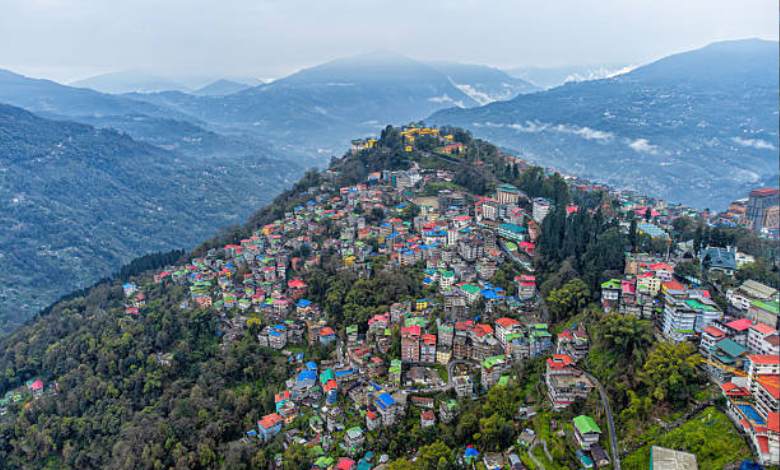
Gangtok is the capital of Sikkim and the state’s main administrative center. It functions as the political, commercial, and urban hub of the state. For many visitors, Gangtok also serves as the entry point to Sikkim’s wider Himalayan landscape, including monasteries, mountain viewpoints, cultural sites, and routes toward northern and western parts of the state.
Sikkim currently has six districts: Gangtok, Gyalshing, Mangan, Namchi, Pakyong, and Soreng. The district structure matters because Sikkim’s mountainous geography requires decentralized administration across difficult terrain. Public data on administrative divisions should be checked against official sources, as district names and boundaries can change over time.
The state’s current executive leadership is also a time-sensitive fact. The Government of Sikkim lists Prem Singh Tamang as Chief Minister and Om Prakash Mathur as Governor. These details are accurate based on current official listings, but they should be rechecked whenever the article is updated.
Biodiversity and Natural Heritage
The Sikkim Himalayas are known for their ecological richness. The Government of Sikkim describes the state as a biodiversity hotspot with distinctive natural resources, culture, and landscapes. The region includes forests, alpine zones, wildflowers, orchids, rhododendrons, medicinal plants, and high-altitude habitats.
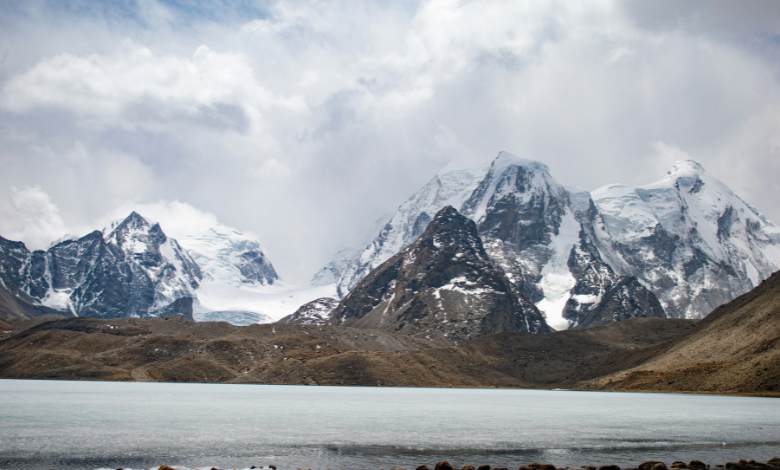
Khangchendzonga National Park is one of the most important protected areas in Sikkim. UNESCO identifies it as a World Heritage property located within a mountain range of global biodiversity conservation significance. UNESCO also notes that the park covers about 25% of the state of Sikkim and contains significant plant and mammal diversity within the Central and High Asian Mountains.
Sikkim’s state symbols further reflect its natural identity. The blood pheasant is recognized as the state bird, while the Copper Mahseer, also known locally as Katley, has been reported as the state fish. These symbols help represent Sikkim’s Himalayan ecology, but species-related claims should be verified with official or scientific sources when used in educational or research content.
Culture, Monasteries, and Spiritual Landscape
The cultural identity of Sikkim is closely connected with its Himalayan setting. Buddhist monasteries, local festivals, mountain reverence, traditional communities, and multilingual society all contribute to the state’s public image. However, Sikkim should not be described as culturally uniform. Like many Himalayan regions, it contains layered histories and diverse communities.
Pemayangtse Monastery is often mentioned in relation to Sikkim’s Buddhist heritage. It is one of the well-known monasteries in western Sikkim and is historically associated with the state’s religious landscape. Other monasteries, including Rumtek, Enchey, Phodong, and others, are also part of Sikkim’s broader cultural and spiritual map. Claims about age, lineage, or ritual importance should be supported by reliable sources because monastery histories can be complex.
Culture in Sikkim is also shaped by geography. High-altitude settlements, agricultural practices, trade routes, and religious sites are all influenced by mountain conditions. This makes the Sikkim Himalayas not only a physical region but also a cultural landscape where nature and identity are closely linked.
Tourism and Public Image
Sikkim is widely known as a tourism destination because of its mountains, monasteries, scenic roads, biodiversity, and relatively compact geography. Visitors often associate the state with Gangtok, mountain views, lakes, high passes, monasteries, trekking routes, and seasonal flowers. These attractions have made Sikkim one of the better-known Himalayan destinations in India.
At the same time, tourism should be discussed responsibly. The Himalayan environment is fragile, and Sikkim’s location includes sensitive border zones, protected areas, and high-altitude landscapes. Some areas may require permits, and access can depend on weather, security rules, road conditions, or official restrictions. Any travel-focused article should avoid making blanket claims about year-round access.
A balanced description should also avoid reducing Sikkim to postcard imagery. Tourism is only one part of the state’s identity. Sikkim also has an administrative life, ecological responsibilities, educational institutions, local economies, farming communities, and a complex historical background.
Also Read: Polhawn Fort: Cornwall’s Historic Coastal Wedding Venue
Philanthropy and Public Engagement
Because the Sikkim Himalayas are a region rather than an individual, philanthropy in the personal sense does not apply. There is no personal charitable record to document, and it would be misleading to assign philanthropic activity to a geographical region.
Public engagement is better understood through conservation, cultural preservation, tourism management, and government or community-led environmental initiatives. Khangchendzonga National Park’s UNESCO status is one documented example of public recognition linked to conservation and heritage protection.
Where specific organizations, local groups, or public campaigns are discussed, their names and activities should be verified individually. Without direct documentation, claims about philanthropy, activism, or community leadership should not be added.
Public Perception and Misconceptions
One common misconception is that Sikkim is only a tourist destination. While tourism is important, the state’s identity is much broader. It includes history, governance, ecology, border geography, culture, agriculture, and conservation.
Another misconception is that Kangchenjunga is simply a mountain view. In Sikkim, the mountain is also connected to cultural meaning, protected landscapes, and regional identity. A factual article should present this significance carefully without overstating religious or cultural claims.
A third misunderstanding is that all Himalayan regions are the same. Sikkim’s geography, history, languages, borders, and political development make it distinct from other Himalayan areas. Its admission to India in 1975, its small land area, and its location between Nepal, Bhutan, Tibet/China, and West Bengal give it a specific historical and geopolitical profile.
Legacy and Future
The legacy of the Sikkim Himalayas rests on three major foundations: geography, culture, and historical transformation. Its mountains and biodiversity make it ecologically important. Its monasteries and cultural traditions make it a significant Himalayan cultural region. Its 1975 statehood marks a defining political transition in modern Indian history.
Looking ahead, Sikkim’s future will likely continue to be shaped by environmental conservation, sustainable tourism, infrastructure development, cultural preservation, and climate-related challenges. These are realistic areas of analysis, but future claims should remain evidence-based. It would be inappropriate to predict political outcomes, population changes, or environmental shifts without reliable data.
The most credible way to write about Sikkim is to treat it as a living Himalayan state with documented achievements and ongoing challenges. Its significance does not require exaggeration. The verified facts already show why Sikkim holds a distinctive place in India’s Himalayan region.
FAQs About Sikkim Himalayas
What are the Sikkim Himalayas known for?
The Sikkim Himalayas are known for Kangchenjunga, glaciers, alpine meadows, Buddhist monasteries, wildflowers, and rich mountain biodiversity.
Where is Sikkim located?
Sikkim is located in northeast India, bordered by Nepal, Bhutan, Tibet/China, and West Bengal.
What is the capital of Sikkim?
The capital of Sikkim is Gangtok.
Which is the highest mountain in Sikkim?
Kangchenjunga, also known as Khangchendzonga, is the highest mountain associated with Sikkim.
When did Sikkim join the Indian Union?
Sikkim joined the Indian Union on 16 May 1975.
Conclusion
The Sikkim Himalayas represent one of India’s most important Eastern Himalayan landscapes. Sikkim is a small northeastern state with Gangtok as its capital, Kangchenjunga as its defining mountain landmark, and a history that includes its admission to the Indian Union on 16 May 1975. Its six districts, biodiversity, monasteries, and mountain ecosystems make it a region of administrative, cultural, and environmental importance.
A fact-based profile of Sikkim should avoid speculation and focus on verified information. The state’s story is not limited to tourism or scenery. It includes historical change, ecological richness, cultural depth, and public responsibility. In that sense, the Sikkim Himalayas remain both a geographical region and a meaningful part of India’s Himalayan identity.

3 Comments
Pingback: Susie Hilfiger Profile: Former Wife of Tommy Hilfiger and Private Life - TrueTimes
Pingback: Nebraska Charter Bus Rental : Comfortable Travel At Affordable Prices
Pingback: Acropolis of Athens: History, Architecture, and the Parthenon