
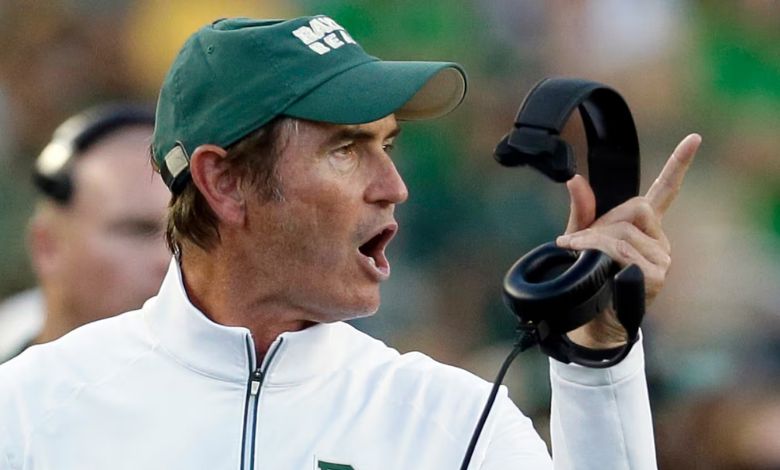
Art Briles is an American football coach best known for his head coaching work at the University of Houston and Baylor University. His career includes major football success, especially as an offensive coach, but it is also closely tied to one of the most serious controversies in modern college football. Any factual biography of Art Briles must address both parts of his public record: his on-field achievements and the circumstances that led to his dismissal from Baylor in 2016.
Briles built his reputation through Texas high school football before moving into college coaching. At Houston and Baylor, he became associated with high-scoring offenses, program development, and bowl appearances. Baylor’s rise under his leadership made him one of the most prominent coaches in the sport during the early 2010s.
At the same time, his career changed dramatically after Baylor’s handling of sexual assault allegations came under investigation. Art Briles was dismissed in 2016, and his later attempts to return to college coaching drew public scrutiny. In November 2025, Eastern New Mexico University announced him as its head football coach, marking a new chapter in a career that remains both successful and controversial.
Early Life and Football Background
Art Briles, whose full name is Arthur Ray Briles, is from Rule, Texas. His Texas background is central to his coaching identity because much of his early football career developed inside the state’s high school football system. Texas high school football is known for strong community interest, large programs, and a deep coaching culture, and Briles built his early reputation in that environment.
Before becoming a national college football name, Briles spent years developing as a coach at the high school level. His success there helped him move into the college game and shaped the offensive ideas that later became associated with his teams.
Some details about his early private life are less important to his public biography and should not be expanded without strong sourcing. The most relevant early-life fact is his long connection to Texas football, which became the foundation for his later career.
Texas High School Football Career
Art Briles first became widely known as a successful Texas high school football coach. His work at Stephenville High School became especially important to his reputation. During that period, he became associated with offensive innovation, aggressive scoring, and program-building.
His high school success helped establish him as more than a local coach. It made him a figure college programs could evaluate as someone capable of building systems and developing players. The offensive style he later used at Houston and Baylor had roots in this earlier coaching period.
However, specific high school records, championships, and year-by-year numbers should be verified before being published in a statistics-heavy biography. Briles’ broad high school success is well known, but exact totals should always come from reliable athletic records.
Also Read: Who Is Brianna Olsen? Facts About the TikTok Creator and Online Personality
University of Houston Career
Briles became head coach at the University of Houston in 2002. His tenure there lasted through 2007 and served as his major entry into college head coaching. Houston gave him the opportunity to apply his offensive approach at the Division I level and show that his system could work beyond high school football.
At Houston, Briles helped rebuild the Cougars’ profile and led the program to bowl appearances. His teams became known for offensive production and a faster, more aggressive style of play. That success raised his profile nationally and made him a candidate for a larger Power Five job.
Houston was the bridge between Briles’ Texas high school career and his later rise at Baylor. Without that period, his Baylor hiring would be harder to understand. Houston proved that his offensive ideas could translate into college success.
Baylor Career and Program Rise
Briles became Baylor’s head football coach in 2008. At the time, Baylor was not considered a consistent Big 12 contender. Under Briles, the program improved dramatically and became nationally relevant. His Baylor teams were known for fast-paced offense, explosive passing, and strong production from skill-position players.
The high point of his Baylor tenure came in the early 2010s. Baylor won Big 12 championships during his time as head coach, and Briles was recognized as the 2013 AP College Football Coach of the Year. His record at Houston and Baylor, as summarized by Eastern New Mexico, was 99–65 with 10 bowl games.
His Baylor tenure also helped raise the profile of several players and assistants. Briles became known as a program-builder and offensive mind, and his teams regularly drew attention from college football media because of their scoring ability.
Still, any account of Baylor under Briles must include the controversy that later reshaped his legacy. His success on the field cannot be separated from the institutional failures and public criticism that emerged during and after his tenure.
Baylor Scandal and 2016 Dismissal
In 2016, Baylor dismissed Art Briles after investigations into the university’s handling of sexual assault allegations, including allegations involving football players. The scandal led to major leadership changes at Baylor, including Briles’ removal as head coach.
The issue was not only about football results. It centered on how the university and athletic department responded to serious allegations. Reporting at the time described failures in communication, accountability, and institutional response. Briles later said he took responsibility for the football program’s poor handling of allegations.
This subject should be handled carefully and without sensational language. A factual biography should not include graphic descriptions or unsupported legal claims. It should state clearly that Baylor’s handling of allegations came under investigation, that Briles was dismissed, and that the controversy remains central to public evaluation of his career.
Later reporting also noted that the NCAA criticized Briles’ actions and approach while not finding him guilty of NCAA rules violations in certain findings. That distinction matters. Public criticism, institutional findings, NCAA conclusions, and legal outcomes are not always the same thing. A balanced profile should separate them clearly.
Also Read: Martha Fiennes Biography: From Music Videos to Feature Films and Generative Art
Coaching After Baylor
After leaving Baylor, Briles attempted to return to coaching in several settings. His post-Baylor career included work outside major college football, including international football and a return to Texas high school football. These roles showed that he remained active in the sport, but they also reflected how difficult it was for him to return to mainstream college coaching.
Public reaction followed many of these opportunities. Because of the Baylor scandal, Briles’ hiring or possible hiring often drew criticism. This pattern became part of his post-Baylor public profile: football programs considered his coaching record, while critics pointed to the seriousness of the Baylor controversy.
A responsible biography should not describe these later years only as a comeback story. They were also years shaped by continued debate over accountability, reputation, and whether institutions should hire him again.
Grambling State Hiring and Resignation
In 2022, Grambling State hired Briles as offensive coordinator. The decision quickly drew criticism because of his Baylor history. Within a few days, he resigned from the role.
The Grambling episode is important because it showed how strongly the Baylor controversy continued to affect Briles’ career. Even years after his dismissal, public reaction remained intense whenever a college program considered hiring him.
This section should be kept concise and factual. The key point is that Art Briles was hired, criticism followed, and he resigned shortly afterward.
Eastern New Mexico Hiring
In November 2025, Eastern New Mexico University announced Art Briles as its head football coach. The university’s staff profile lists him as head coach and cites more than 40 years of coaching experience. ESPN also reported the hiring, describing it as his first college head coaching job since his Baylor exit.
The hire drew attention for two reasons. First, Art Briles had a long record of football success at Houston and Baylor. Second, his return to college coaching remained controversial because of the Baylor scandal.
Eastern New Mexico’s decision placed Briles back into a college head coaching role, this time at the Division II level. Since coaching roles can change, any future article about him should verify his current status through the school’s official athletics page before publication.
Coaching Style and Football Philosophy
Art Briles is widely associated with offense. His teams have often been known for spread concepts, tempo, vertical passing, and space-based attacks. At Houston and Baylor, his offenses helped produce points quickly and put pressure on opposing defenses.
His approach influenced how many observers viewed him as a coach. Supporters often pointed to his ability to build programs and develop offensive systems. Critics, however, have argued that football success cannot outweigh the failures associated with Baylor’s handling of serious allegations.
Both views are part of his public profile. A neutral biography should not overpraise his football style while ignoring controversy, and it should not erase his coaching achievements when discussing the scandal.
Family and Personal Life
Some public information connects Briles to a football family. His son, Kendal Briles, is also a football coach and has held major assistant coaching roles. Still, Briles’ private family life should not be the focus of a public biography unless details are directly relevant and reliably documented.
Information about his finances, private relationships, home life, and personal views should be treated cautiously. The strongest public record concerns his coaching career, public controversy, and employment history.
Philanthropy and Public Engagement
There is no strong public record showing Art Briles as the founder of a major charity or nonprofit organization. His public engagement is mostly documented through football coaching, program leadership, and community-facing roles connected to schools and teams.
That does not mean he has had no private charitable involvement. It only means formal philanthropy is not a major documented part of his public profile. A factual biography should not call him a philanthropist unless reliable sources support that claim.
Public Perception and Misconceptions
One misconception is that Art Briles’ career is defined only by football success. His achievements at Houston and Baylor were significant, but his Baylor dismissal and the scandal around the program are central to his public legacy.
Another misconception is that the Baylor controversy is simple. It involved university processes, athletic department decisions, public reporting, legal actions, NCAA findings, and disputed interpretations. A serious biography should not reduce it to one sentence or treat it as a minor footnote.
A third misconception is that Briles was permanently out of college football. His Eastern New Mexico hiring in 2025 showed that he returned to a college head coaching role, although under continued public scrutiny.
Also Read: Cruella Morgan Biography: Age, TikTok Career, Style, and Profile Facts
Legacy and Future
Art Briles’ legacy is complicated. On the football side, he is remembered as a coach who helped rebuild Houston and Baylor, developed high-scoring offenses, and won major recognition. His Baylor teams changed the program’s national profile and made him one of the most discussed coaches of his era.
On the public accountability side, his legacy remains tied to Baylor’s failures in handling serious allegations. That controversy continues to shape how his career is discussed, how institutions evaluate him, and how the public responds to his coaching opportunities.
His future should not be predicted. It would be speculative to claim that he will rebuild Eastern New Mexico, repair his public reputation, or return to a higher-profile college job. What can be said is that his ENMU role marks the latest stage in a career that remains highly scrutinized.
FAQ’s
Who is Art Briles?
Art Briles is an American football coach known for head coaching roles at Houston, Baylor, and Eastern New Mexico.
Where is Art Briles coaching now?
Eastern New Mexico University announced him as head football coach in November 2025.
Why did Baylor fire Art Briles?
Baylor fired him in 2016 after investigations into the university’s handling of sexual assault allegations, including allegations involving football players.
What is Art Briles known for as a coach?
He is known for offensive football success, Houston and Baylor program-building, and a controversial public legacy connected to Baylor’s scandal.
Is Art Briles’ private life fully public?
No. His coaching career is well documented, but private family, finances, and personal-life details should not be guessed.
Conclusion
Art Briles is a football coach whose career includes major achievements and major controversy. He built his reputation in Texas high school football, succeeded at Houston, and helped turn Baylor into a Big 12 contender. Art Briles offensive systems and program-building record made him one of the most prominent coaches in college football during the early 2010s.
At the same time, his dismissal from Baylor in 2016 after investigations into the university’s handling of sexual assault allegations remains central to his public profile. Later coaching opportunities, including the brief Grambling State role and the 2025 Eastern New Mexico hiring, continued to draw attention because of that history.
A factual Art Briles biography should include both sides: the coach with a strong football résumé and the public figure whose legacy is inseparable from Baylor’s scandal. The most accurate profile is balanced, careful, and clear about what is documented.
